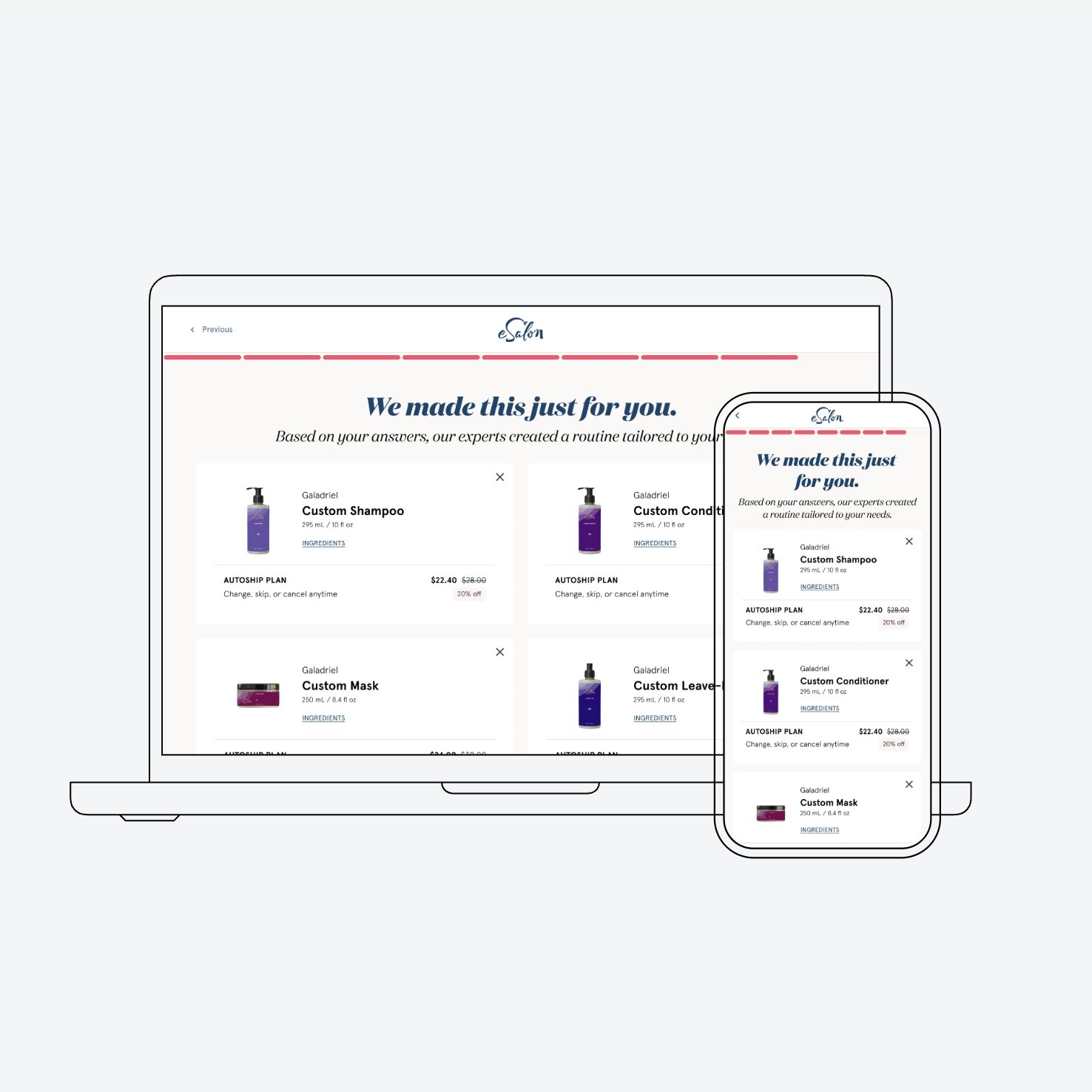
eSalon | Lead UX Designer
Personalized Hair Care Quiz
Defining the logic behind a personalized hair-care recommendation system.
The challenge
Personalization only works if people finish the quiz.
More questions can improve recommendations, but they also make people drop off. The job was deciding which questions mattered, what the system could assume, and how to make each step feel like progress.
Halfway through the project, a first round of layoffs eliminated Product Management and UX Research. I took over discovery, gathering input from executives in Marketing, Engineering, Customer Service, and R&D, and turned it into the decisions that shaped a 0-to-1 experience.
My approach
Ask only the questions that matter.
I audited 19 personalization quizzes, including Function of Beauty and Prose. To learn which questions actually drove recommendations, I answered each quiz repeatedly with different answers and tracked how the recommended products changed. Most included questions that made no difference to the results. I cut the same kind from eSalon's quiz, including "How long is your hair?", "How often do you wash your hair?", and "After a wash, how long does it take for your hair to become oily?"
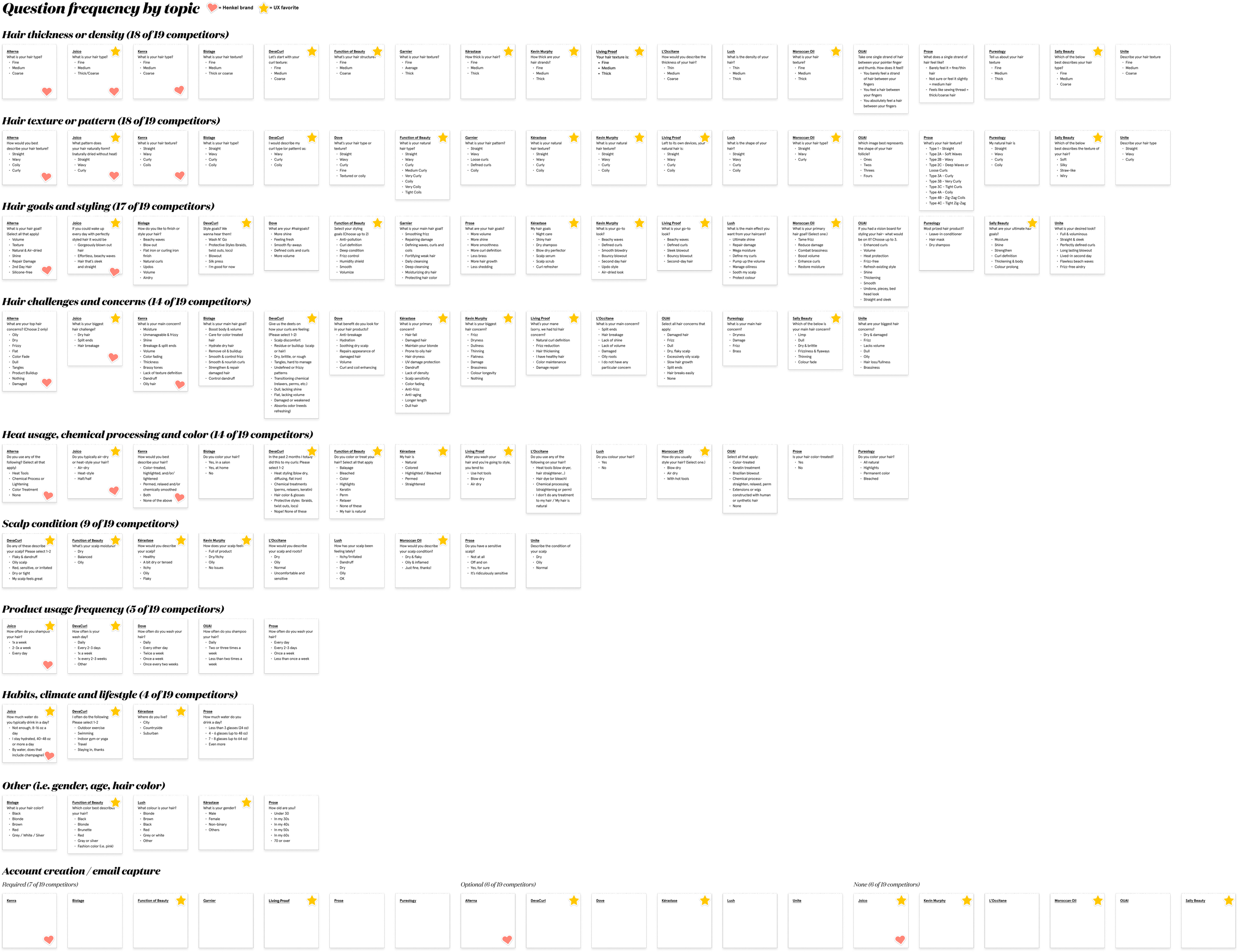
One quiz, three kinds of customers.
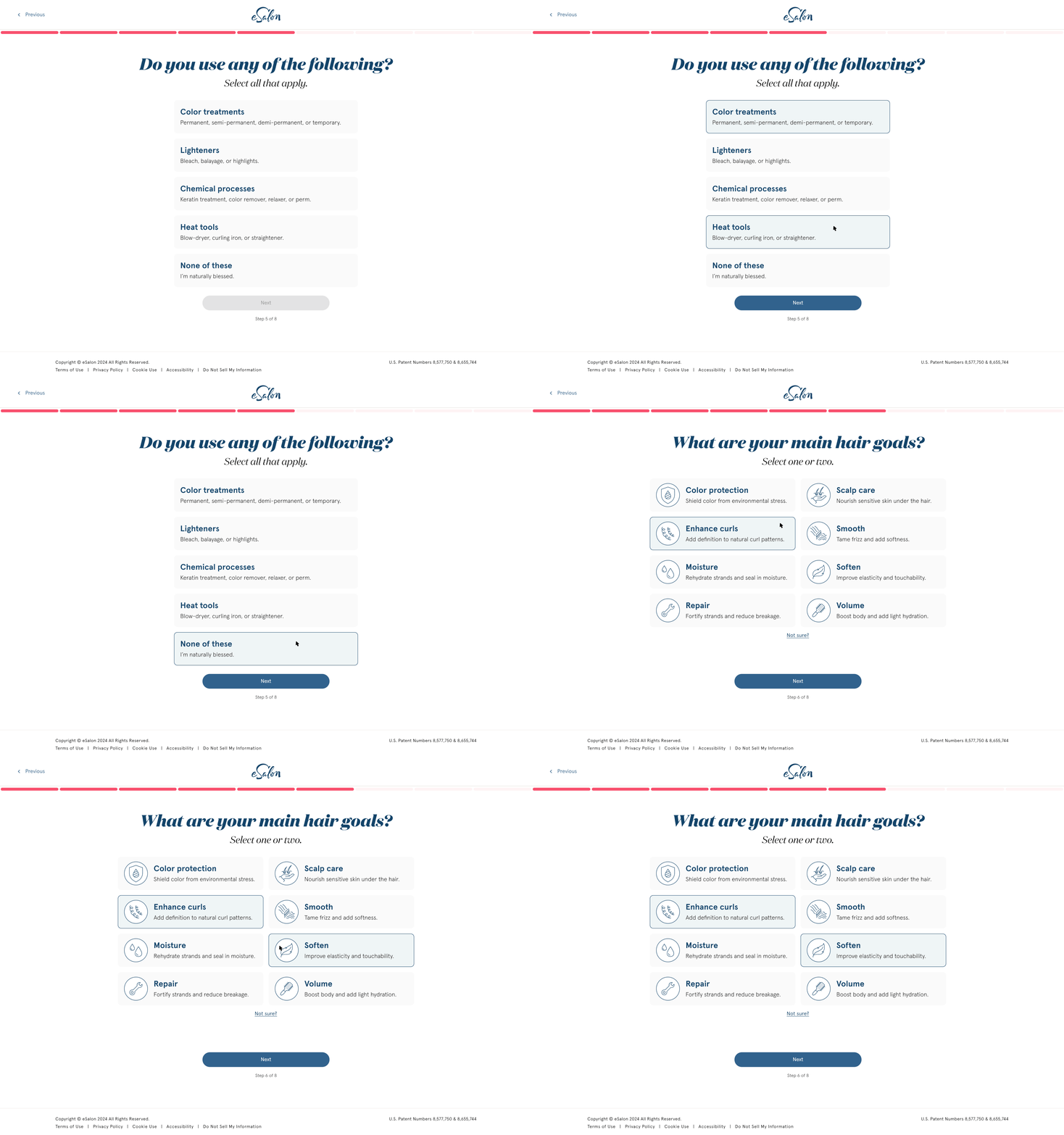
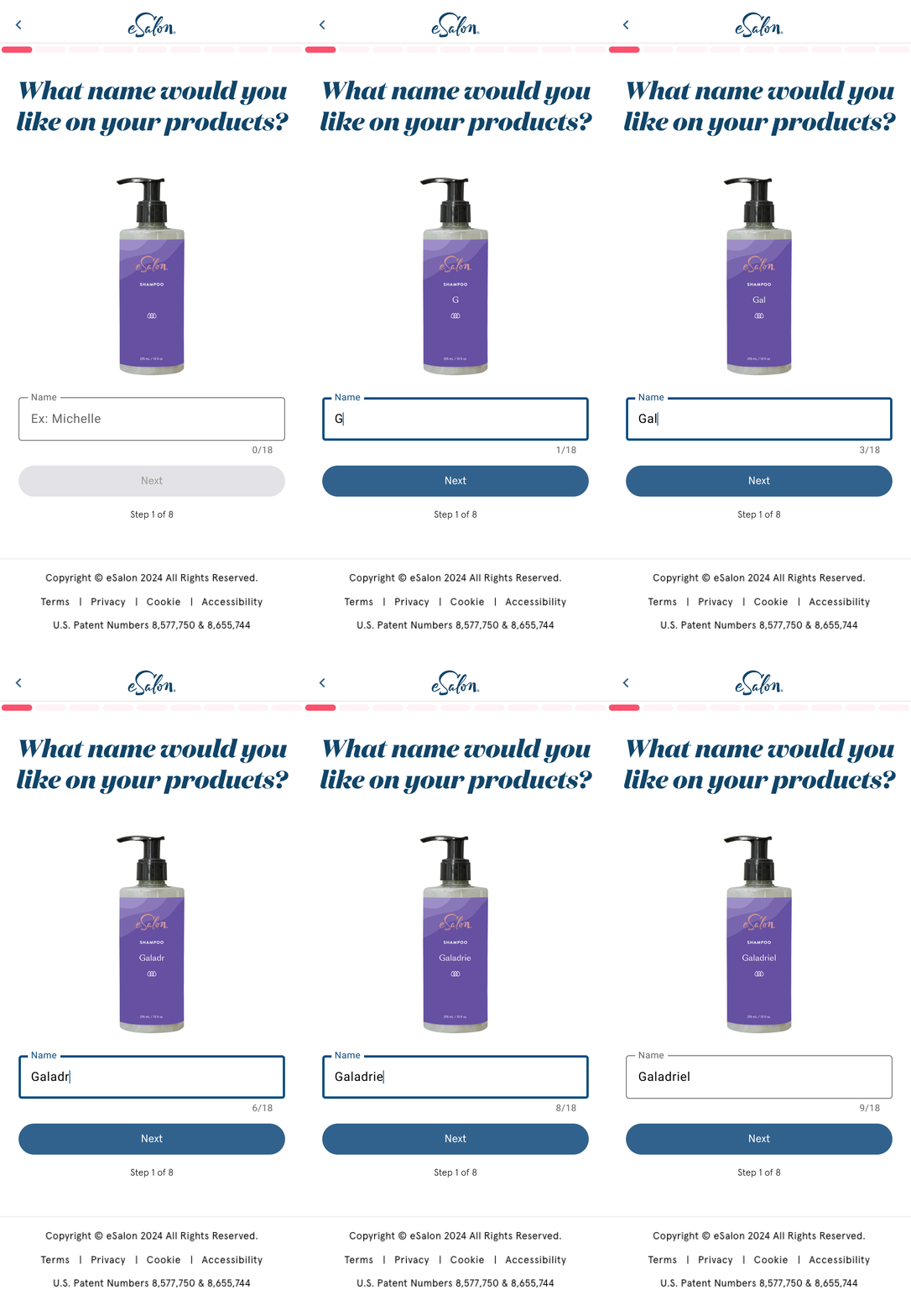
New customers, returning customers who weren't logged in, and logged-in customers each arrived with different information. Instead of sending everyone through the same steps, I designed the quiz to use existing profile data when it was available. A logged-in customer with a completed hair color profile would start with 4 of the 8 steps already done, and no one has to log in or sign up just to begin.

Build on what customers already trust.
Customers already trusted the hair color quiz, so I kept its familiar brand iconography and built the new quiz with eSalon's updated design system: tokens for color, typography, radius, and spacing; components like buttons and cards; and patterns like the multi-step percentage progress indicator and input fields.
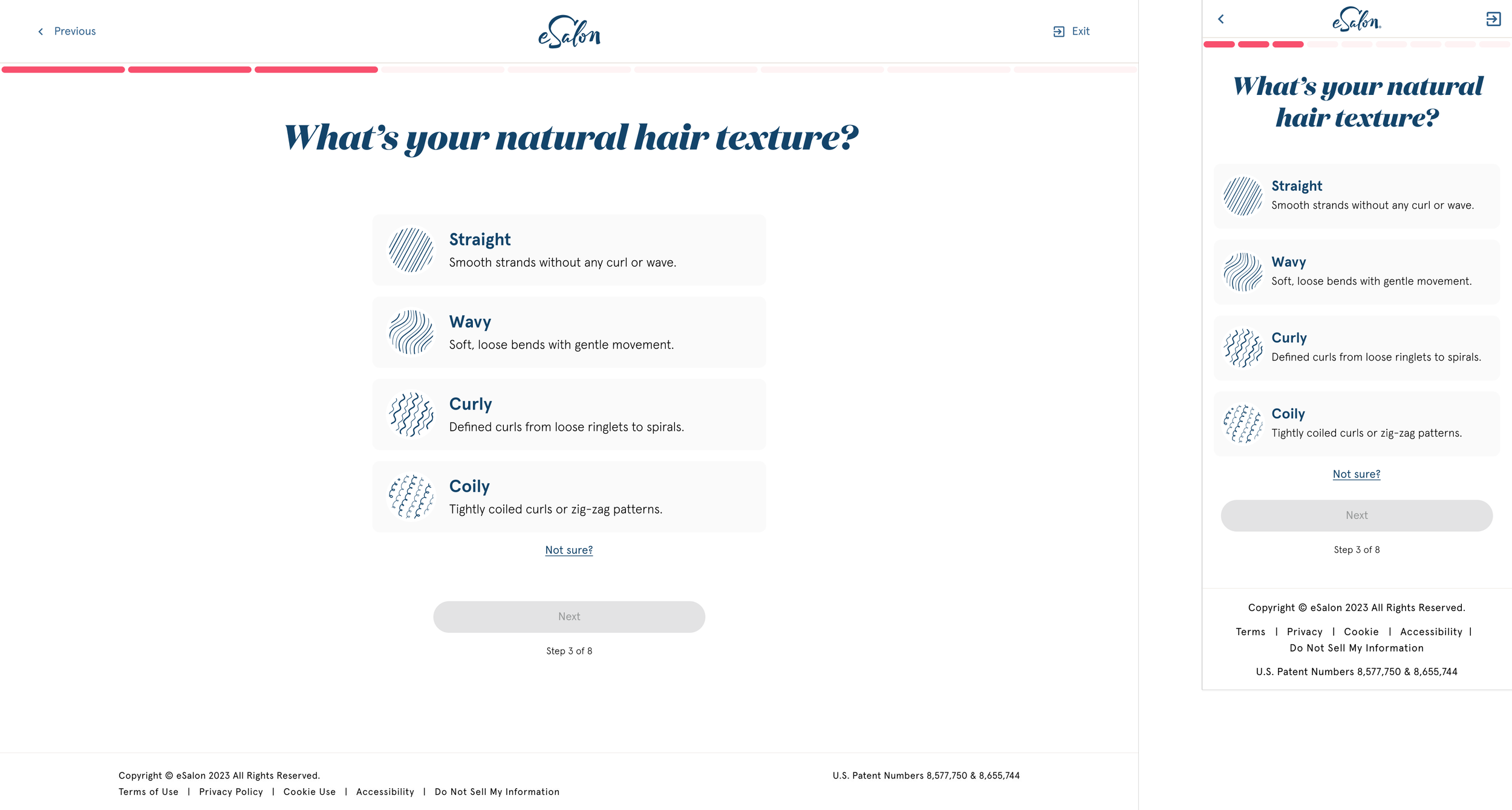
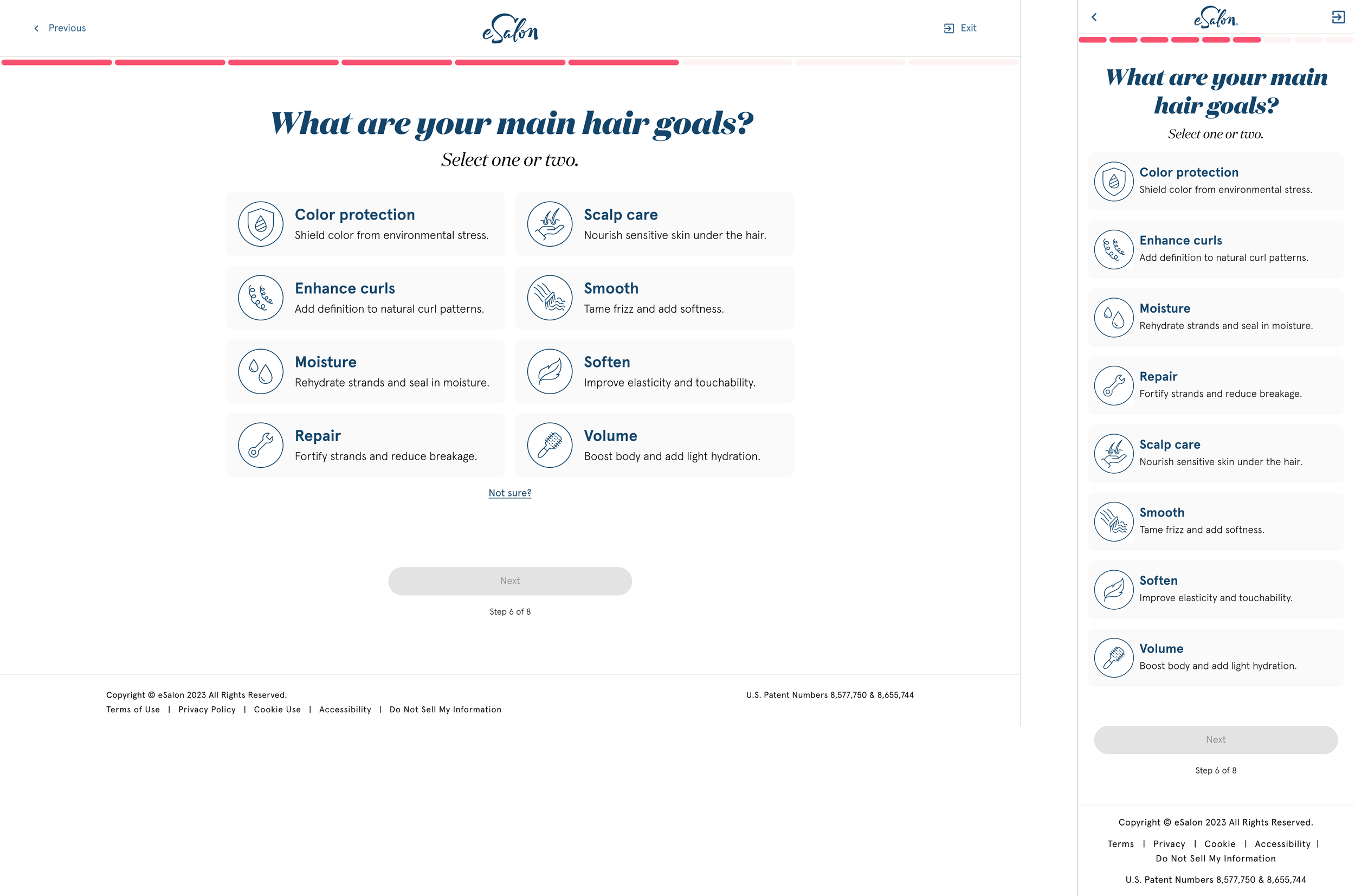
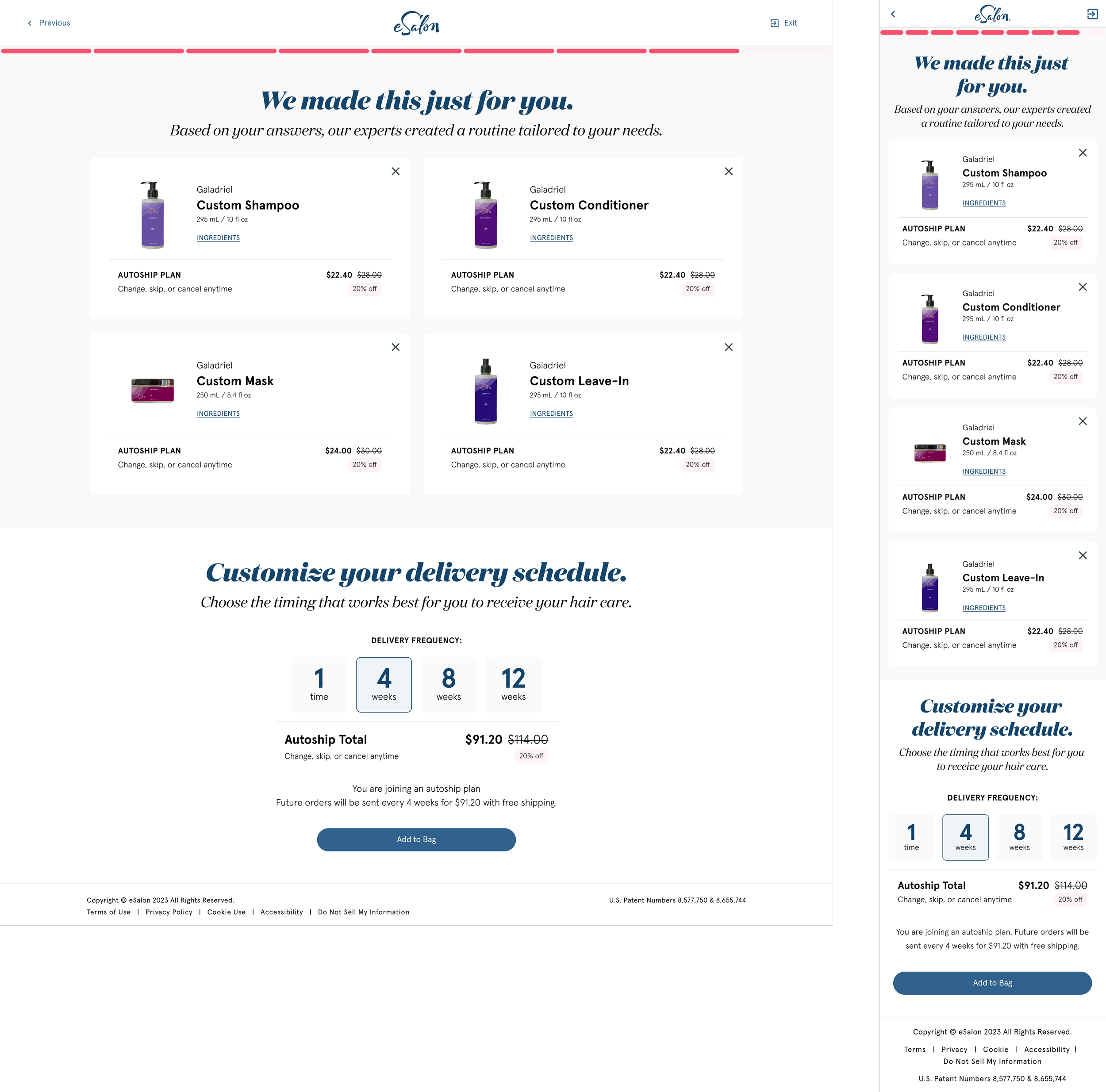
Use prototypes to align stakeholders.
With no PM or researcher left, I needed a way to get Marketing, Engineering, Customer Service, and R&D to agree on how recommendations should work. I built interactive Figma prototypes using variables and conditional logic that showed real branching and customized results, so stakeholders could use the quiz instead of reviewing static screens.
Outcome
The product team backed my research recommendations, along with the design and prototype, so I handed the design off to engineering.
A second round of layoffs eliminated the remaining product and design team, including me, before the custom hair care line moved forward.
With the team reduced by layoffs, engineering had limited resources and utilized content from R&D in the existing hair color quiz instead, so the design and my recommendations never shipped.
More of my work
-
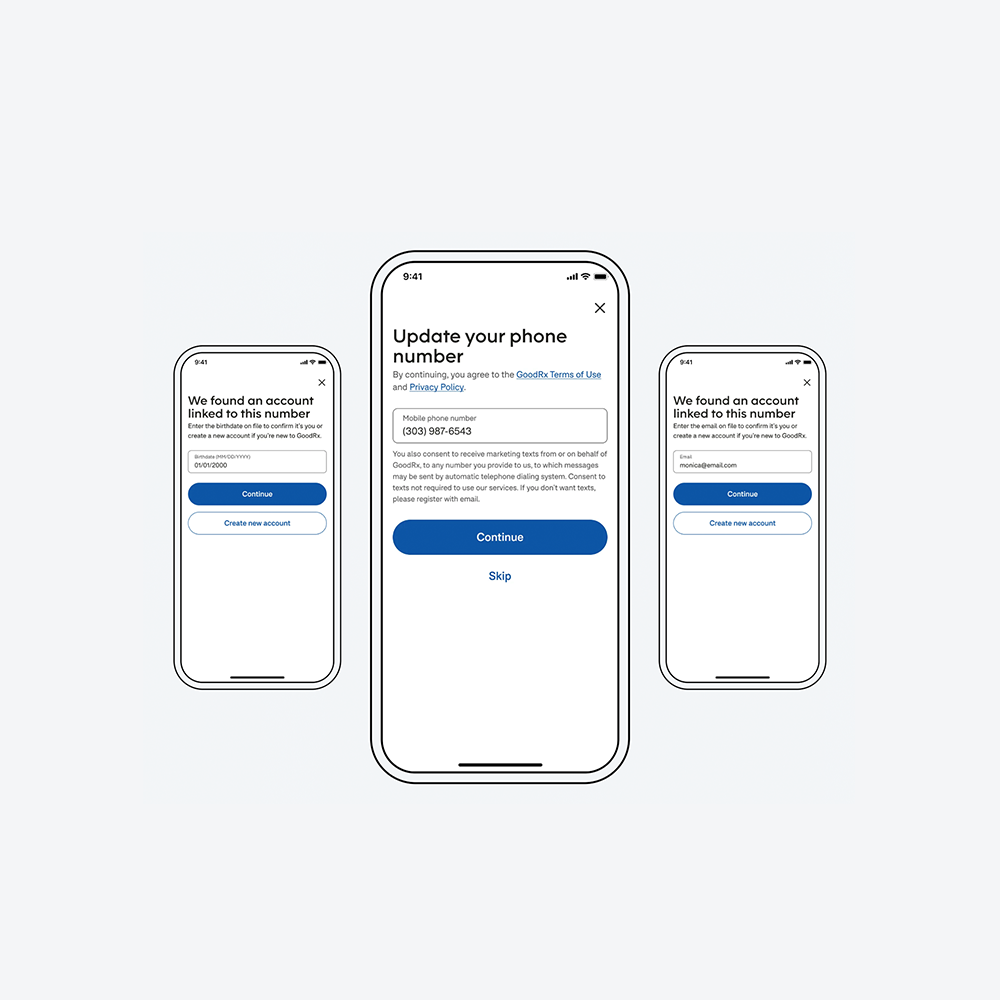
![GoodRx app login flow for a recycled phone number, showing account matching via birthdate and SMS verification.]()
Recycled Mobile Number Verification
GoodRx | Senior Product Designer
-
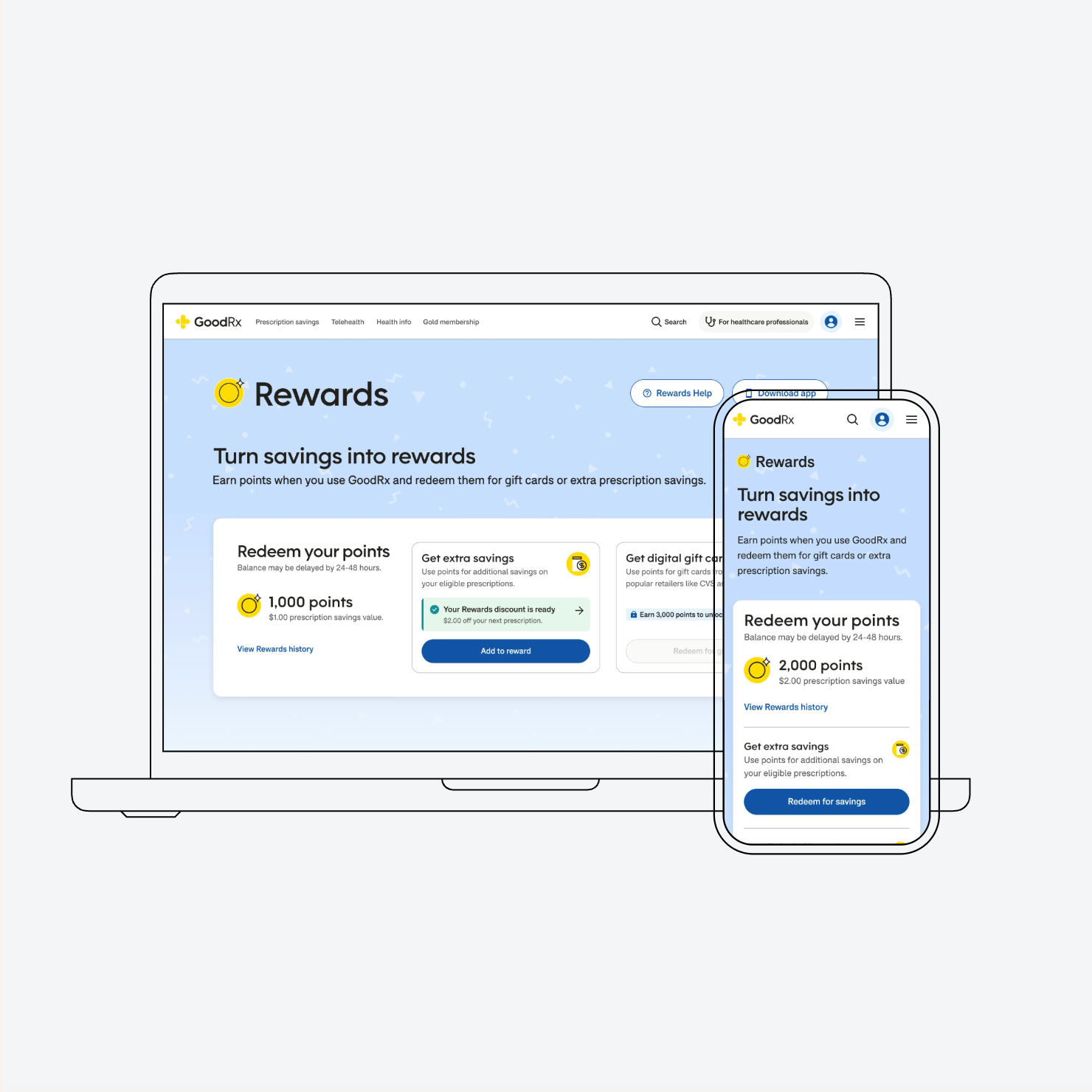
![GoodRx Rewards experience showing how members can redeem points for prescription savings across desktop and mobile.]()
Point-of-Sale Rewards Redemption
GoodRx | Senior Product Designer
-
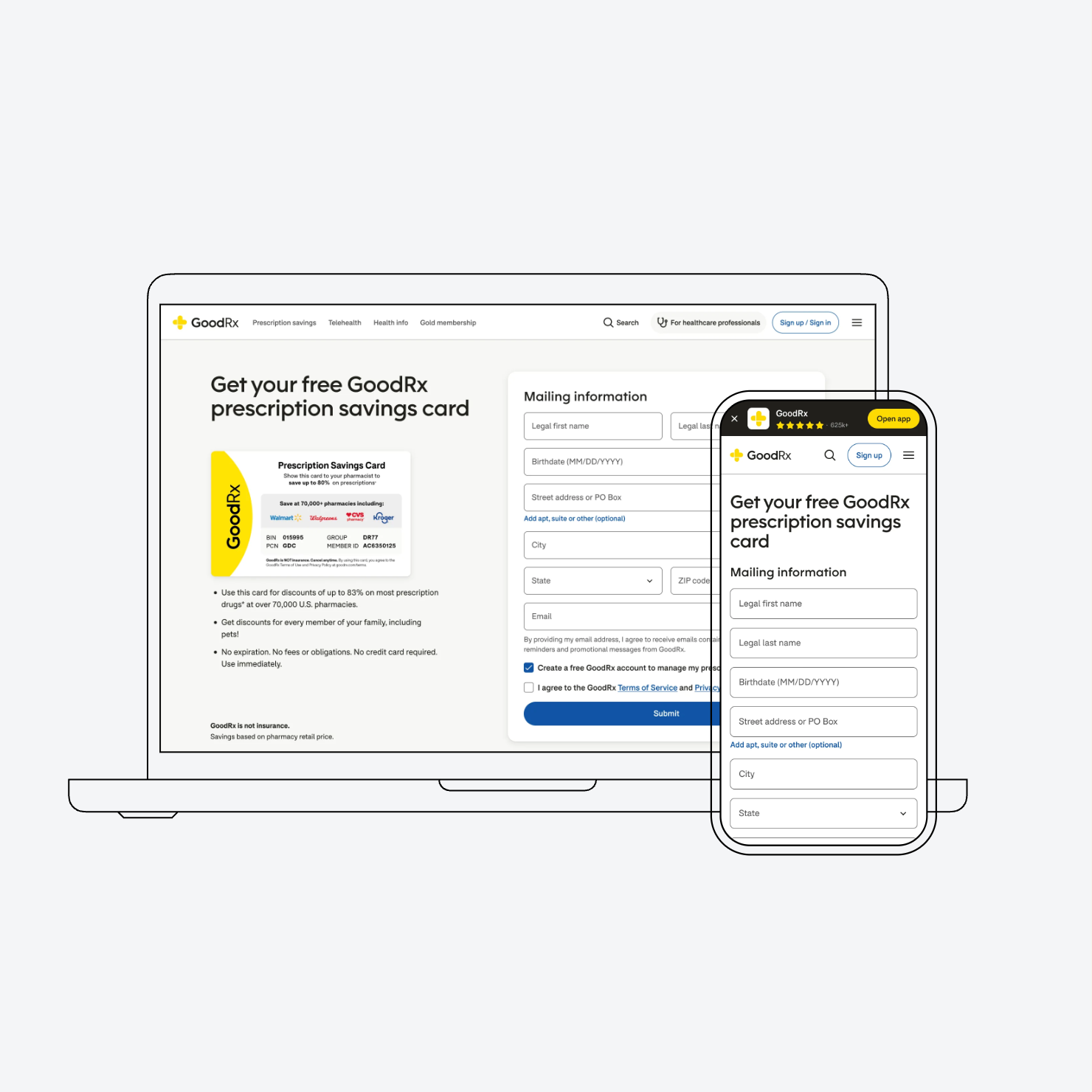
![GoodRx prescription savings card enrollment experience, helping members request a card and provide mailing information across desktop and mobile.]()
Prescription Savings Card
GoodRx | Senior Product Designer
-
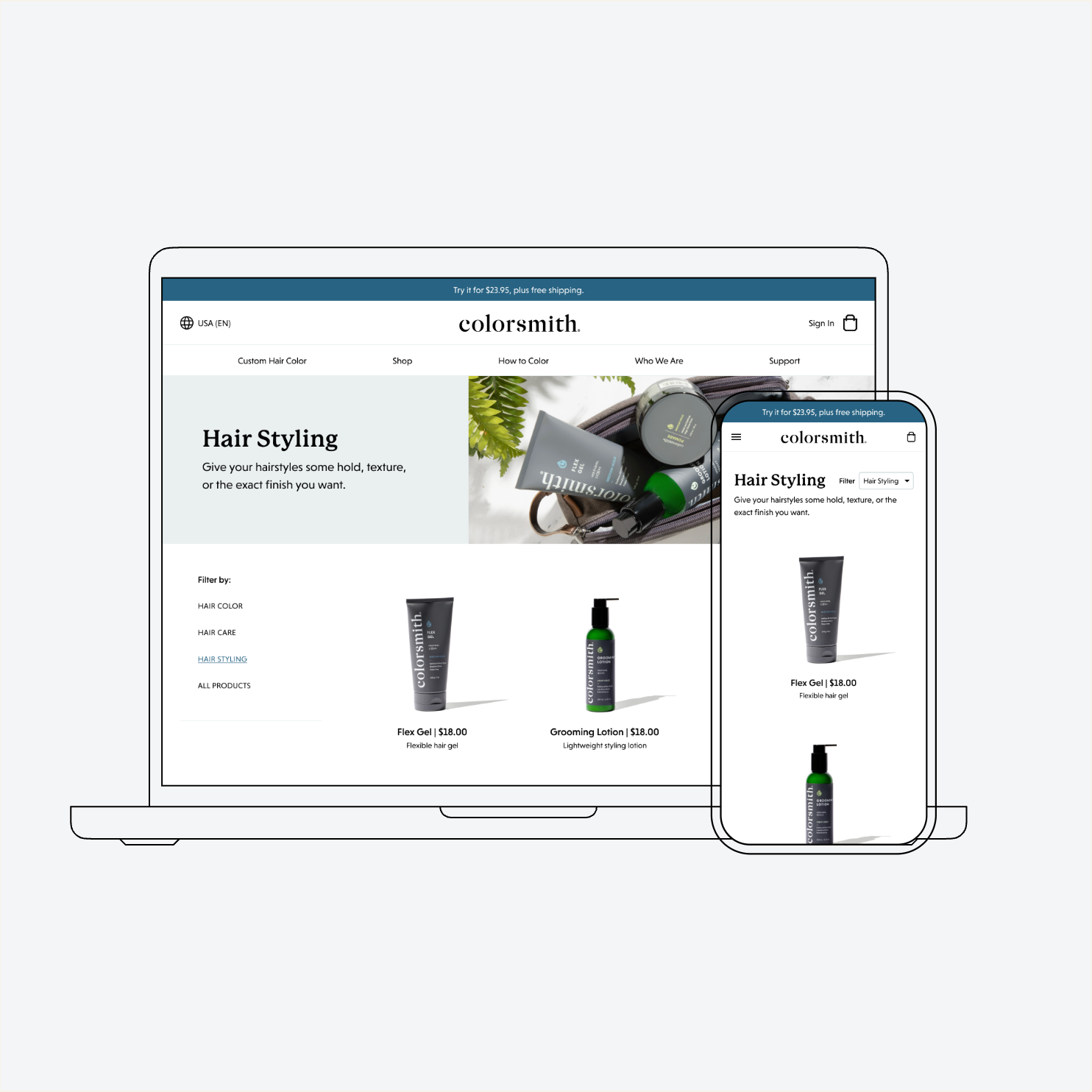
![Colorsmith hair styling product catalog, helping customers browse and filter products across desktop and mobile.]()
Navigation & Product Discovery
eSalon (Colorsmith) | Lead UX Designer